01 — Why setting matters
Place can shape the whole evening
A restaurant’s location is not just a pin on a map. Architecture, light, acoustics, access and the surrounding neighborhood all influence the experience. Entering a quiet courtyard can feel different from stepping into a busy market hall. A cellar may create an enclosed, intimate atmosphere; a waterfront room can make the changing weather part of the view. These details may be a reason to seek a venue, but they do not guarantee that the food or service will suit every guest.
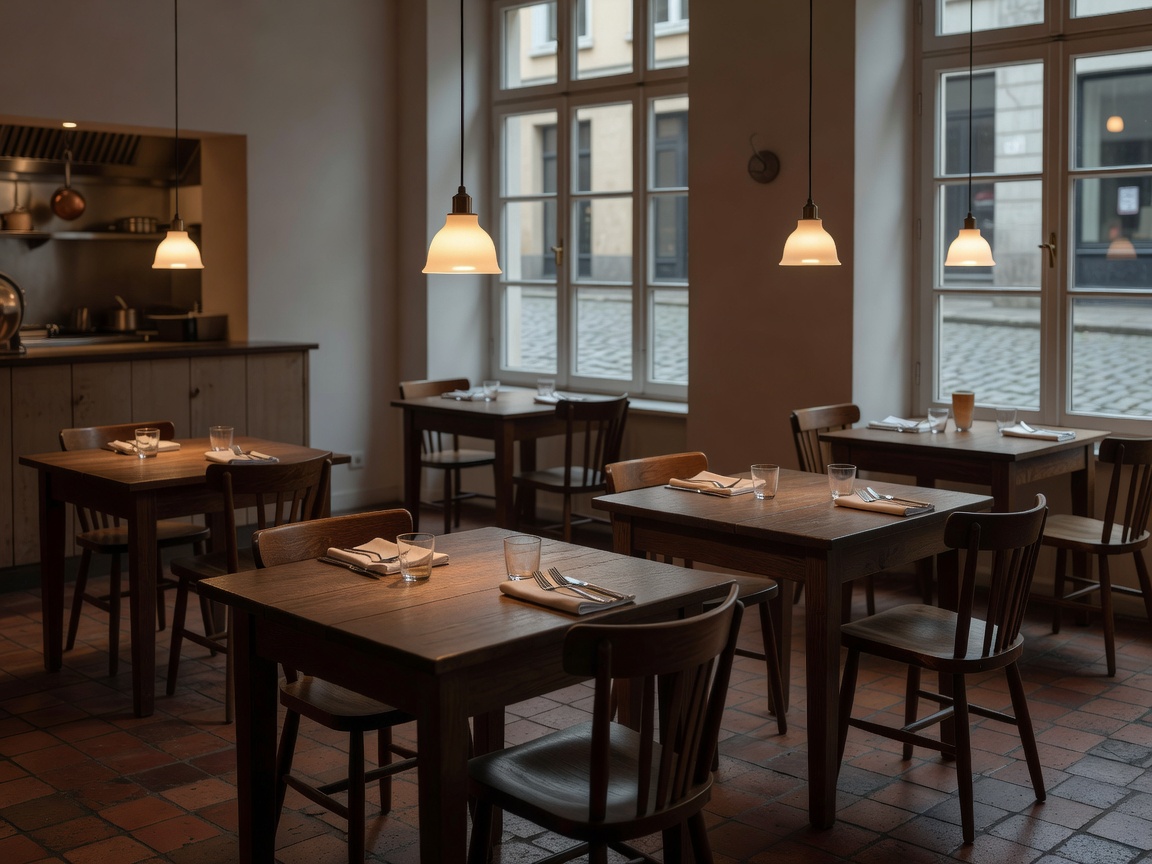
Think of unusual dining settings as a conversation between a building and the way it is used. Historic spaces may have been adapted over time; industrial buildings can take on new purposes; a rural dining room may make distance and landscape part of the visit. The most interesting setting is not necessarily the most dramatic. Sometimes a small architectural detail—a tiled threshold, a long communal table, a view into an open kitchen—makes a room memorable.
Approach each place on its own terms. A converted building may have steps or uneven floors. A cellar can be difficult for some visitors to access. A courtyard might be weather-dependent or seasonal. Rather than assuming, ask the venue about accessibility and practical arrangements before you travel. A thoughtful experience begins with the right information.
02 — Different kinds of unusual
From hidden courtyards to working market halls
Courtyards offer a sense of enclosure and can create a small pause within a dense city. Their mood changes with daylight, weather and the surrounding buildings. Cellars and basement rooms may feel intimate, but can be darker, more compact or less accessible. Former industrial spaces often have generous volume and visible materials; their character depends on how the room has been adapted for dining, not on its past use alone.
Historic buildings bring their own layers, though a restaurant operating in an old structure is not automatically a preservation project or a lesson in local history. Market halls can make eating part of a shared public environment, with varied vendors and a livelier soundscape. Waterfront settings can offer a strong connection to a port, river or coast, while rural destinations may ask guests to plan transport and timing more carefully. Chef counters and open kitchens bring cooking closer to the guest, but some people prefer a quieter table. Every format has trade-offs.
Consider what kind of atmosphere actually helps you enjoy a meal. Do you like conversation around a communal table? Would you rather have privacy? Is a view important, or are acoustics and easy access more important? The answers help turn a striking photograph into a realistic choice.
03 — Choose with care
A practical checklist before you go
Accessibility: Check step-free access, stairs, toilets, seating and any specific mobility requirements directly with the venue. Seasonality: Courtyards, terraces and waterfront spaces can vary with weather or the time of year; confirm what is available for your visit. Reservations: Ask whether advance booking is needed and how the venue handles groups. We do not provide booking links or claim availability.
Atmosphere: Look for clues about noise, lighting, table spacing and service style, but remember that photographs can be selective. Menu: Review current information where available and contact the restaurant about dietary needs. Transport: A rural or peripheral setting may need extra planning, especially later in the evening. Confirm local transport rather than assuming it will be convenient. Opening information: Verify current hours directly, because schedules can change and seasonal operations are not universal.
These questions are not a checklist for judging a restaurant. They are a way to make sure the setting supports the kind of evening you want. A less unusual room may be the better choice if it is more comfortable, accessible or convenient for your group.
What makes a setting memorable
- Architecture and neighborhood context add another layer to dining.
- Small rooms and open kitchens can create a close-up experience.
- Landscapes and converted spaces bring a distinct sense of place.
What to weigh up
- Access, transport and noise may be different from a standard room.
- Outdoor or seasonal spaces may not be available year-round.
- A striking setting does not guarantee a particular meal.
04 — Let the place earn its place
Good for travelers who care about atmosphere
Unusual destinations suit people who notice architecture, enjoy a clear sense of setting or want the meal to connect with a wider day of exploring. They can be a lovely reason to walk a different route, cross a courtyard or travel outside the center. They can also demand more planning. Keep a practical option in reserve, and do not let the appeal of a photograph outweigh access, transport or your own comfort.
Good for
Visitors who enjoy architectural details, intimate rooms, converted spaces, open kitchens, market settings or meals that feel closely connected to a particular landscape.
What to know
We do not list fictional venues as real or claim current operating details. Verify the venue’s location, access, menu, hours and reservation arrangements using its official information. A distinctive setting is one part of the experience—not a promise of quality or an endorsement by this guide.
For regional context to pair with place, browse the Nordic, Central European, Mediterranean and Baltic guides. Each offers a different lens on how neighborhood and food can meet.